In Venice the NCC — noleggio con conducente, hire with driver — exists both on the road and on the water, and it is a category regulated just as tightly as the taxi, not a grey area. The whole difference comes down to one word: planning. A taxi answers an immediate need to travel; an NCC answers a planned one.
Our verdict in short: an NCC is the right call when you know in advance where, when and with how much luggage you have to travel, and you want a dedicated vehicle without queuing at a rank. It is the wrong call if you are hoping to find one on arrival: it cannot be hailed on the spot, and anyone offering you a ride that way is working outside the rules. On price the public information is thin, and that is its main drawback for anyone trying to compare.
Taxi and NCC: the difference, in a table
The distinction is set by the national framework law on non-scheduled passenger transport, and the Comune di Venezia restates it in its own words.
| Taxi (from the rank) | NCC | |
|---|---|---|
| Customers | General public | Specific customer, identified in advance |
| How you get one | Rank, hailing, radio or phone | Booked ahead through the office or the depot, online included |
| Waiting | In public, at authorised ranks | Only inside its own depot or at its own mooring |
| Taxi ranks | Entitled to use them | Barred wherever a taxi service exists |
| Base | Licence tied to the Comune, service starts there | Office and at least one depot in the authorising Comune |
| Return leg | Not required | The service starts and ends at the depot, unless bookings are already logged |
| Fares | Set by the council: meter and fixed routes | Free, agreed in advance |
The practical consequence is blunt: at the airport, at Piazzale Roma, at Mestre station and at the taxi landing stages an NCC does not stop and does not tout for business. It has to be booked, and it meets you at an agreed point.
How many there are, and where they are based
On the road the Comune di Venezia counts 116 NCC authorisations for cars, all with an office and depot inside the city’s territory, alongside the 120 taxi licences. They are awarded by public competition and may be held by an individual or a company; there are also authorisations outside the quota for specific cases such as school buses, hired ambulances and transport for people with disabilities.
On the water the picture is different and worth knowing, because this is the one you will actually meet. Water services follow a council regulation implementing Veneto regional law, which is to say a separate legal instrument from the one covering the road. The quota allows 107 Gran Turismo authorisations plus 5 specifically equipped for passengers with reduced mobility. A water NCC uses vessels of up to 5 gross tonnes and 20 people; above that threshold you move into the Gran Turismo category.
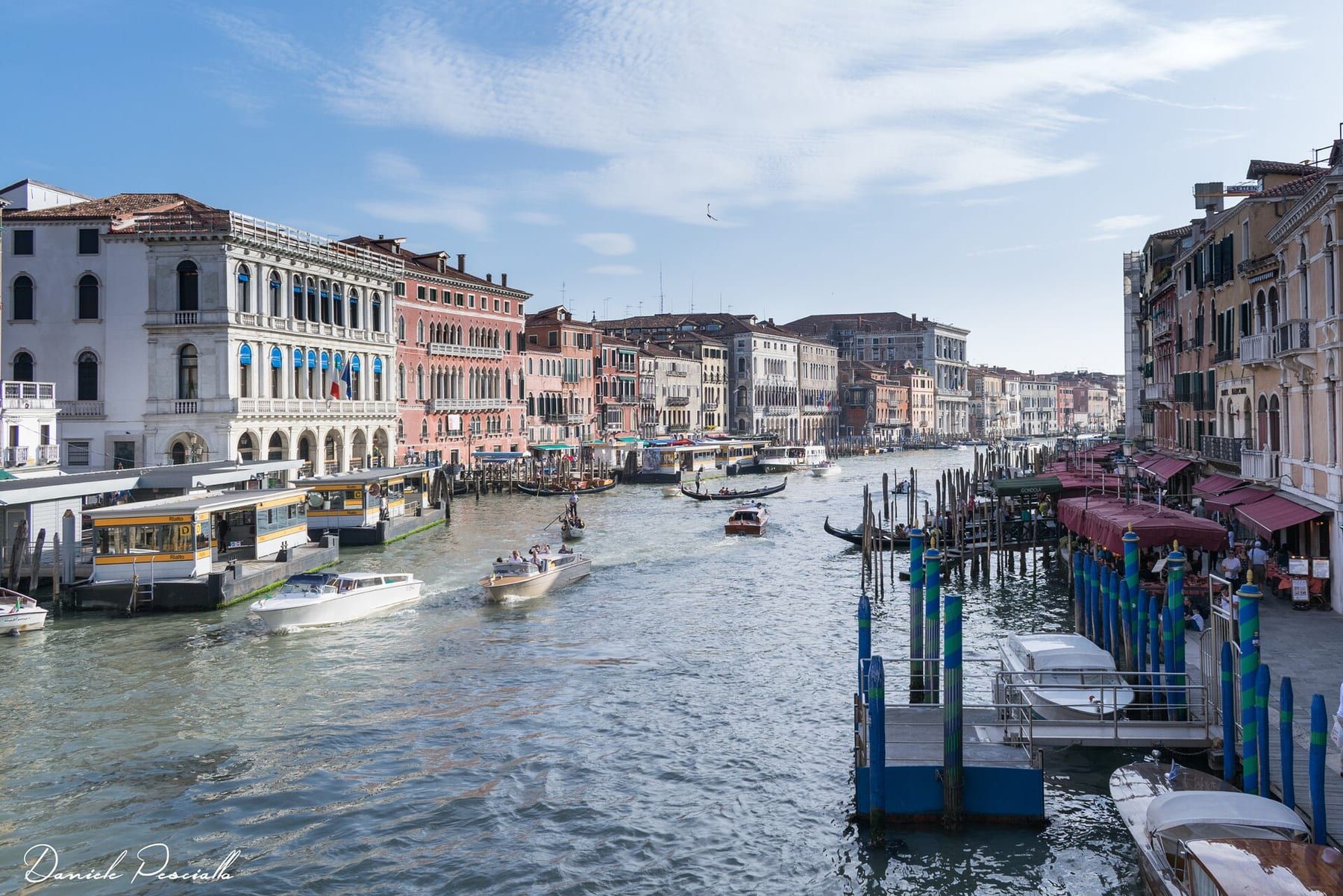
One rule clears up a lot of confusion about landing stages: NCC boats must wait at their own dedicated moorings, separate from the taxi ones. If you board at a council taxi station, you are getting on a water taxi, with its tariff card on display.
How to tell who is authorised
This is the most useful piece of information on the page, and it comes from the city council. Boats can be told apart on sight:
- Water NCC: green bands on the side windows, carrying the council authorisation number and the city’s coat of arms, plus a small green flag at the bow.
- Gran Turismo: red bands.
- Water taxi: licence number on a yellow band.
On the road there is no equally obvious marking: an NCC is an ordinary car, identifiable from its service paperwork. The check you can make is a different one — if you haven’t booked, it isn’t a legitimate NCC.
Marco Polo airport publishes a list of the NCC operators present on its site and explicitly mentions the Uber app among the booking channels. The list includes, among others, 01 Group, Belt Connect, Blitz Exclusive, Bucintoro, Enjoy Venice, International Limousine Service, Luxer Incoming, ShoMe, Vip Limousine Venice, VLS Agency and Your Exclusive Services. On Bucintoro, which also supplies the shared transfers sold on the booking platforms, we have a separate review: Bucintoro Viaggi.
Two honest points about Uber: in Italy it works with licensed NCC drivers and with agreements with taxi drivers, not on the American private-car model, and no car enters the historic centre. At best it takes you to Piazzale Roma or Tronchetto.
What it costs
Here the public information is genuinely scarce, and we’ll say so plainly: Venetian NCC operators do not publish price lists. The price is by definition free and agreed in advance, so there is no tariff card to consult as there is for a taxi, and there isn’t even a published average fare that can honestly be quoted: what circulates online are individual quotes, not benchmarks. Anyone quoting you an “NCC rate” for Venice is generalising from a price they saw once.
With no price lists, the only serious way to judge a quote is to hold it against the benchmarks that do exist:
- On the water, the council’s official fares for the fixed routes: airport ↔ historic centre €110, Piazzale Roma–Ferrovia ↔ San Marco €60, centre ↔ Murano €60. They are all in water taxi prices.
- On the road, the taxi’s fixed fares: airport ↔ Piazzale Roma €40, airport ↔ Mestre Centro €35.
An NCC quote can legitimately sit above those numbers — it is a dedicated service, booked ahead, with a return leg to the depot — but if it sits a long way above with no obvious reason, ask what it includes.
Strengths
- A dedicated vehicle on your schedule, agreed in advance, with the price settled before departure.
- No queue at the rank: the driver waits for you where you agreed.
- Varied fleets, from executive cars to Gran Turismo boats seating up to 20, useful for groups and bulky luggage.
- Verifiable legitimacy on the water, thanks to the coloured bands and the authorisation number.
Weaknesses
- No regulated fare: there is no posted card to check your bill against, as there is for taxis and water taxis.
- Zero flexibility on arrival: if your flight slips or you change your mind, you can’t simply take another one on the spot.
- A legal framework in flux: the national electronic register RENT — which covers vessels too, and therefore Venetian boats — is up and running, but the decree on the electronic service log was annulled by the Lazio regional administrative court, which also struck down the compulsory interval between two consecutive jobs and the obligation to start again from where the previous ride ended. The sector has also gone on strike over the decrees affecting it.
- Category boundaries that are easy to confuse for a visitor: NCC, Gran Turismo and water taxis look very alike from the landing stage.
-
from €215 per boat
Book on GetYourGuide -
from €39 per person
Book on GetYourGuide
The Tronchetto question
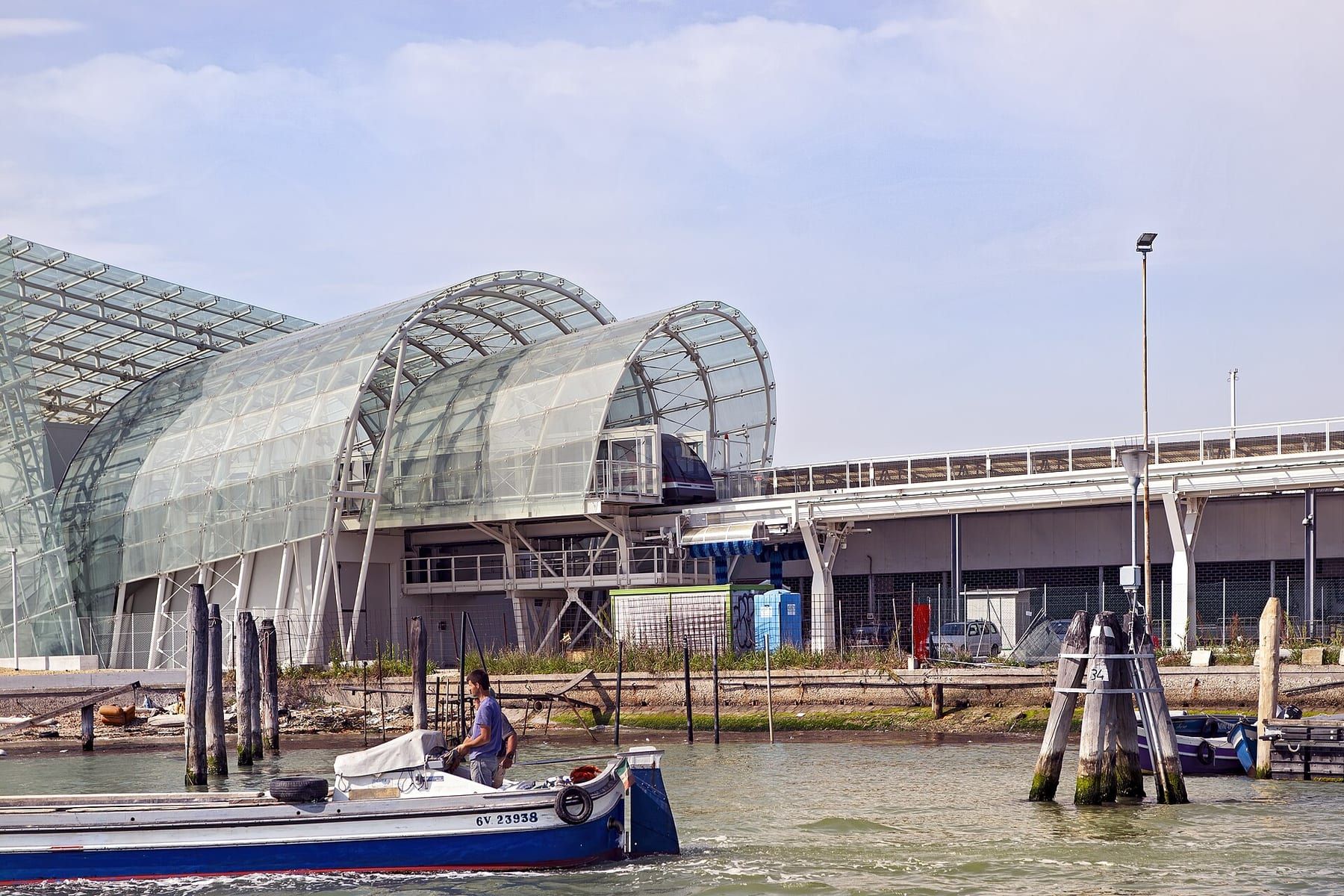
Tronchetto is where road and water meet, and it is also the place about which the most inaccurate information circulates.
The car park is run by Interparking and open 24 hours a day. Published rates run from €6.00 for an hour to €29.00 for a day (6 hours and over). On capacity the operator’s own two pages disagree: one gives around 4,500 spaces including motorbikes, campervans, minibuses and coaches, the other 3,483 car spaces. Take the figure as indicative.
From Tronchetto the People Mover reaches Piazzale Roma in about three minutes on a €1.50 ticket, also valid on city buses and trams. And Tronchetto is an official water taxi boarding point: two of the council’s posted fare tables are right there, at the People Mover station and opposite the ACTV landing stage.
What Tronchetto is not: one of the city’s seven taxi ranks. And no official source documents a dedicated NCC bay inside the car park. If you book an NCC from there, have the exact meeting point confirmed when you book — don’t count on finding a signposted bay.
When to choose it, and the alternatives
Choose an NCC if you have a group, a rigid schedule, oversized luggage or a particular requirement such as a boat equipped for reduced mobility — and if you are happy to lock everything in ahead of time.
- If you need a vehicle right now, on arrival, the taxi is the right category: Radio Taxi Venezia on the road, the council stations on the water.
- If you want a private airport–hotel transfer at a locked price with a voucher, the products bookable online do the same job with a written confirmation: see private water taxi.
- If you are travelling on the mainland, the comparison with ranks and fixed fares is in taxis in Mestre.
- If you are arriving by car, parking and connections are covered in Piazzale Roma and Tronchetto.
The NCC in Venice is a legitimate service and sometimes the best solution, but it lives by one rule: book it in advance. Ask for the total price in writing, check the coloured bands if you are boarding a boat, and if someone offers you a “private” ride while you are queuing at the rank, walk away and stay in the queue.
Frequently asked questions
What is the difference between a taxi and an NCC in Venice?
A taxi serves the general public, waits at ranks, can be hailed in the street and charges fares set by the city council. An NCC serves a specific, already identified customer, is booked through its office or depot, may not use taxi ranks and agrees the price in advance.
Can I flag down an NCC at the airport or at Piazzale Roma?
No. An NCC cannot be hailed on the spot and cannot wait on a taxi rank. If a car or a boat offers you an unbooked ride at those points, it is operating outside the rules.
How do I recognise an authorised NCC boat?
NCC boats carry green bands on their side windows showing the council authorisation number and the city's coat of arms, plus a small green flag at the bow. Gran Turismo boats carry red bands; water taxis show their licence number on a yellow band.
How much does an NCC cost in Venice?
There is no regulated fare: the price is free and agreed beforehand. Get the total in writing, with supplements and meeting point, and compare it with the official water taxi fare for the same journey.
Is there Uber in Venice?
Marco Polo airport lists the Uber app among the booking channels for the NCC operators present on its site. In Italy Uber works with licensed NCC drivers, not with private cars, and no car enters the historic centre.
Is there an NCC bay at Tronchetto?
Tronchetto is not one of the city's seven taxi ranks, and no official source documents a dedicated NCC bay inside the car park. Agree the exact meeting point with the operator when you book.