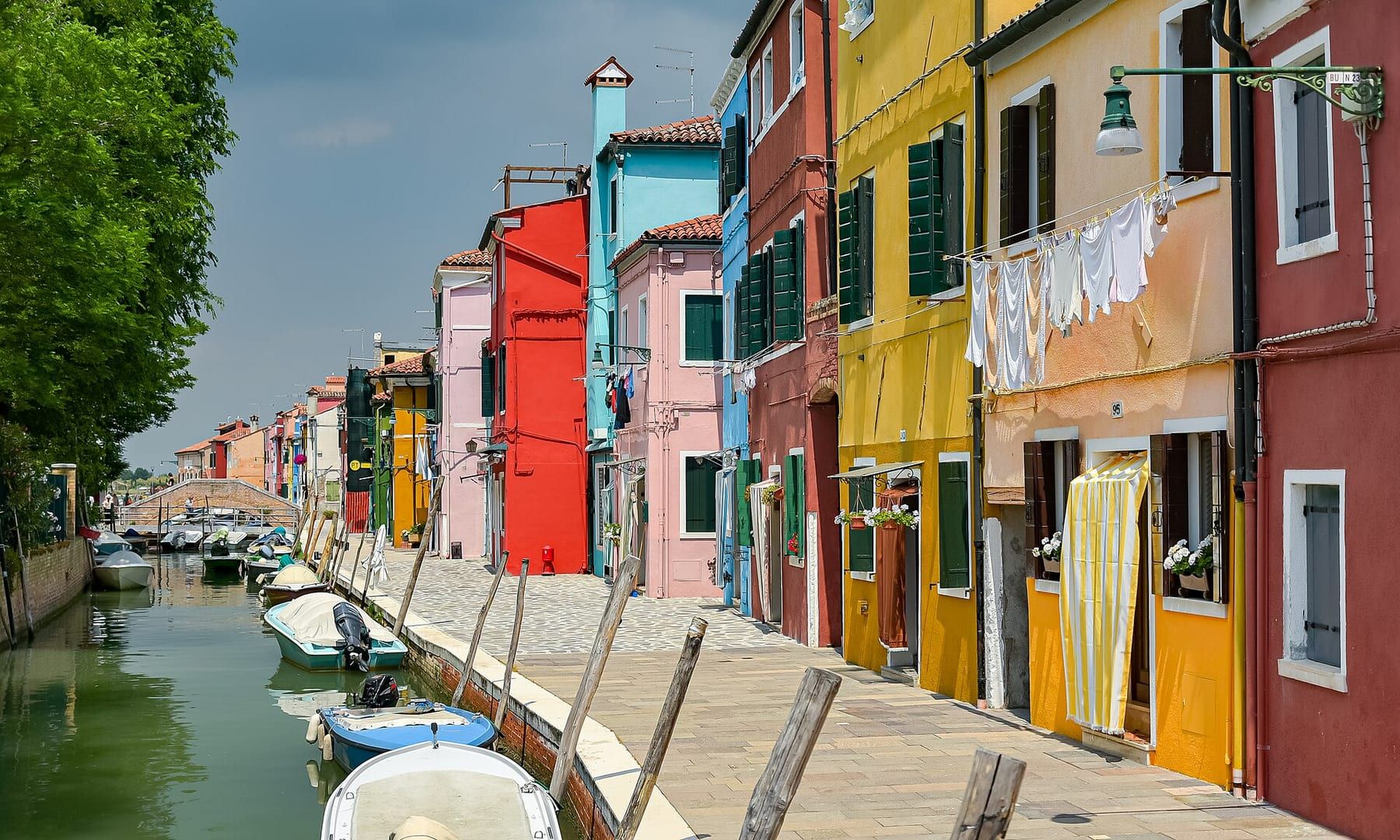
The water taxi to Murano and Burano has an official fare for each run, and that is the first number to fix in your head. According to the fare schedule of the Comune di Venezia — the city council — the historic centre ↔ Murano costs €60 per boat, and the historic centre ↔ Burano or Torcello costs €115 per boat. From Marco Polo airport you pay €60 for Murano and €140 for Burano or Torcello.
These are prices for the boat, not per person. That one distinction turns every calculation on its head: on your own a taxi is hard to justify, while for four or six people it becomes a reasonable choice.
A taxi pays off in four concrete situations: you are a group, you have heavy suitcases, your timing falls outside the convenient sailings, or your accommodation on the island has its own water entrance. Outside those cases the ACTV vaporetto and Alilaguna will get you there for a fraction of the money.
-
from €215 per boat
Book on GetYourGuide -
from €18 per person
Book on Tiqets
Your options compared
| Option | What you pay | Basis of the price | Who it suits |
|---|---|---|---|
| Private water taxi | €60 Murano · €115 Burano/Torcello | per boat, official fare | groups, luggage, awkward hours, door to door |
| ACTV vaporetto | €9.50 for the 75-minute ticket | per person | one or two people travelling light |
| ACTV day pass | €25 for 24 hours | per person | anyone making several trips in a day, Lido and Mestre included |
| Alilaguna (from the airport) | €10 to Murano, €18 return | per person | anyone flying in and sleeping on Murano |
| Organised island tour | varies | per person | anyone who wants a guide and stops included |
The vaporetto is the standard answer for the northern lagoon: ACTV lines link Fondamente Nove with Murano, Burano and Torcello on the ordinary 75-minute ticket at €9.50. Line 12 takes 9 minutes to Murano Faro and about 41 minutes to Burano, with departures every 20 minutes through the middle of the day and every half-hour early in the morning and in the evening. Torcello is the special case: line 12 serves it directly only on the early-morning and evening sailings, and otherwise as a request stop that has to be booked on the freephone number at least twenty minutes in advance. During the middle of the day you reach it from Burano on the line 9 shuttle, a five-minute crossing every quarter of an hour.
Alilaguna is most useful when you are arriving from the airport: the Blue Line calls at Murano Colonna and the airport ↔ Murano ticket costs €10 per person, €18 return. It is a scheduled service with stops along the way, not a direct link.
The water taxi, finally, is the only option that takes you from your exact starting point to the landing closest to your door, at any hour. That is what you are paying for, not speed as such.
The official fare, route by route
The fare schedule in force comes from city council resolutions (deliberazioni di Giunta comunale) no. 227 and no. 516, and has not changed since. For the northern lagoon islands there are only a handful of entries that concern you, and they are worth memorising.
- Historic centre ↔ Murano: €60 (reduced rate for residents and people with disabilities €48)
- Historic centre ↔ Burano or Torcello: €115 (reduced €92)
- Marco Polo airport ↔ Murano: €60 (reduced €48)
- Marco Polo airport ↔ Burano or Torcello: €140 (reduced €112)
- From Murano to P.le Roma–Ferrovia, Rialto or San Marco: €60 (reduced €48)
On top of these figures come the surcharges set out on the same fare sheet: €10 per person from the fifth passenger onwards on fixed-price runs (€5 on metered service), €3 for every suitcase beyond the first four and beyond the number of passengers, a €10 night surcharge between 22:00 and 06:00, and a €5 call-out surcharge if you board or land anywhere other than a city taxi rank.
Pay attention to that last point. None of the fourteen city ranks is on the northern lagoon islands: the schedule lists runs departing from Murano, but the jetty you step onto is not a rank. For the journey back, book ahead and budget for the call-out.
Commercial operators quote their own rates, which are higher than the city schedule. When you are offered a figure that differs from these, you are reading a commercial price, not the official fare: ask what it is based on before you step aboard. The full breakdown is on Prices.
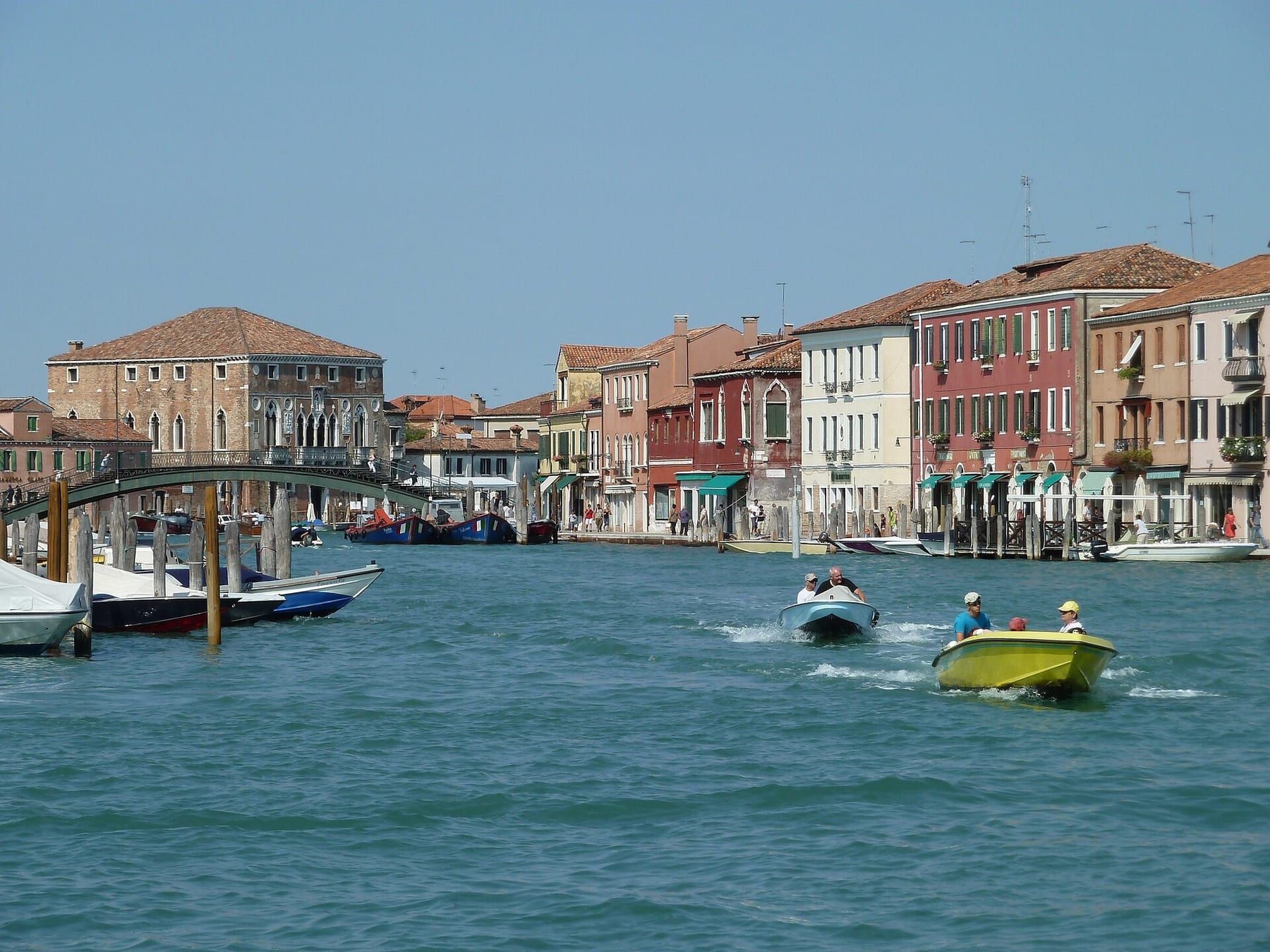
Straight from the airport to the islands
If you are sleeping on Murano or Burano, skipping the historic centre makes sense. The airport ↔ Murano fare is €60 per boat, the same as from the centre: it is one of the better-value official runs on the sheet. For Burano and Torcello it rises to €140.
You board at the airport’s darsena, the boat dock, reached from arrivals along a covered walkway with moving pavements: allow 7–10 minutes on foot. The public-transport ticket office is in the arrivals hall, where the Consorzio Motoscafi also has a desk; the Alilaguna offices, by contrast, are over by the jetties.
A practical rule at the darsena: ignore anyone who approaches you along the way, and deal only at the official counter or with the boat you have already booked. If you have a voucher, the exact meeting point is written on the voucher itself.
If you are travelling light and not in a hurry, Alilaguna from the airport to Murano at €10 per person remains unbeatable. The full comparison between taxi, Alilaguna and vaporetto is on Taxi vs Alilaguna vs vaporetto, while Airport → Venice covers every arrival option.
How to spend less on the islands
The sums come from dividing the per-boat fare by the number of people, remembering the surcharge from the fifth passenger.
- Murano, four people: €60 ÷ 4 = €15 each. The vaporetto costs €9.50 per person per ride, so for a one-way trip the difference is a few euros.
- Murano, six people: €60 + €20 of surcharge (two passengers beyond the fourth) = €80, or about €13 each. Here the taxi costs less than the vaporetto.
- Burano, six people: €115 + €20 = €135, about €22.50 each. Dearer than the ACTV ticket, but with no changes and no waiting.
Other ways to keep the bill down, all of them checkable against the fare sheet:
- Avoid the 22:00–06:00 window: the official night surcharge is €10. Under its own commercial terms the Consorzio Motoscafi charges €15 between 22:00 and 07:00.
- Keep your luggage to four pieces: from the fifth onwards you pay €3 per suitcase under the city schedule, €5 under the Consorzio’s rates.
- Agree the price and how it is calculated (per boat or per person) before you get in, exactly as the city council explicitly recommends for land taxis. The same applies on the water.
- Ask whether they take cards. Online bookings are paid by card or PayPal, but on board many licence holders prefer cash.
- If you are a resident or have a certified disability, you are entitled to the 20% reduced fare: those are the second set of figures on the sheet posted at the rank.
On the booking platforms, at the time of checking, a private taxi from the airport sells for around €215 per boat for up to six people: that is a reseller’s price, not the city fare, and it includes a guaranteed booking made in advance.
An island tour is not a scheduled run
This is where most enquiries come unstuck. The figures in the schedule are point-to-point transfers: they take you from A to B and stop there. A circuit taking in Murano, Burano and Torcello with stops and waiting is something else — hire with a skipper, at a price agreed case by case.
The alternative is the meter: a €15 fixed charge on departure plus €2 a minute, with the clock still running while you sightsee. Two hours of cruising and stops comes to more than €250 before any surcharges. Put plainly: for a tour of the islands, an organised tour or the vaporetto costs less.
The water taxi is at its best as a straight transfer — arrival, departure, the evening trip back when sailings thin out — and as transport for anyone with luggage or limited mobility. Twenty-five of Venice’s 250 licences are on boats fitted with a wheelchair lift.
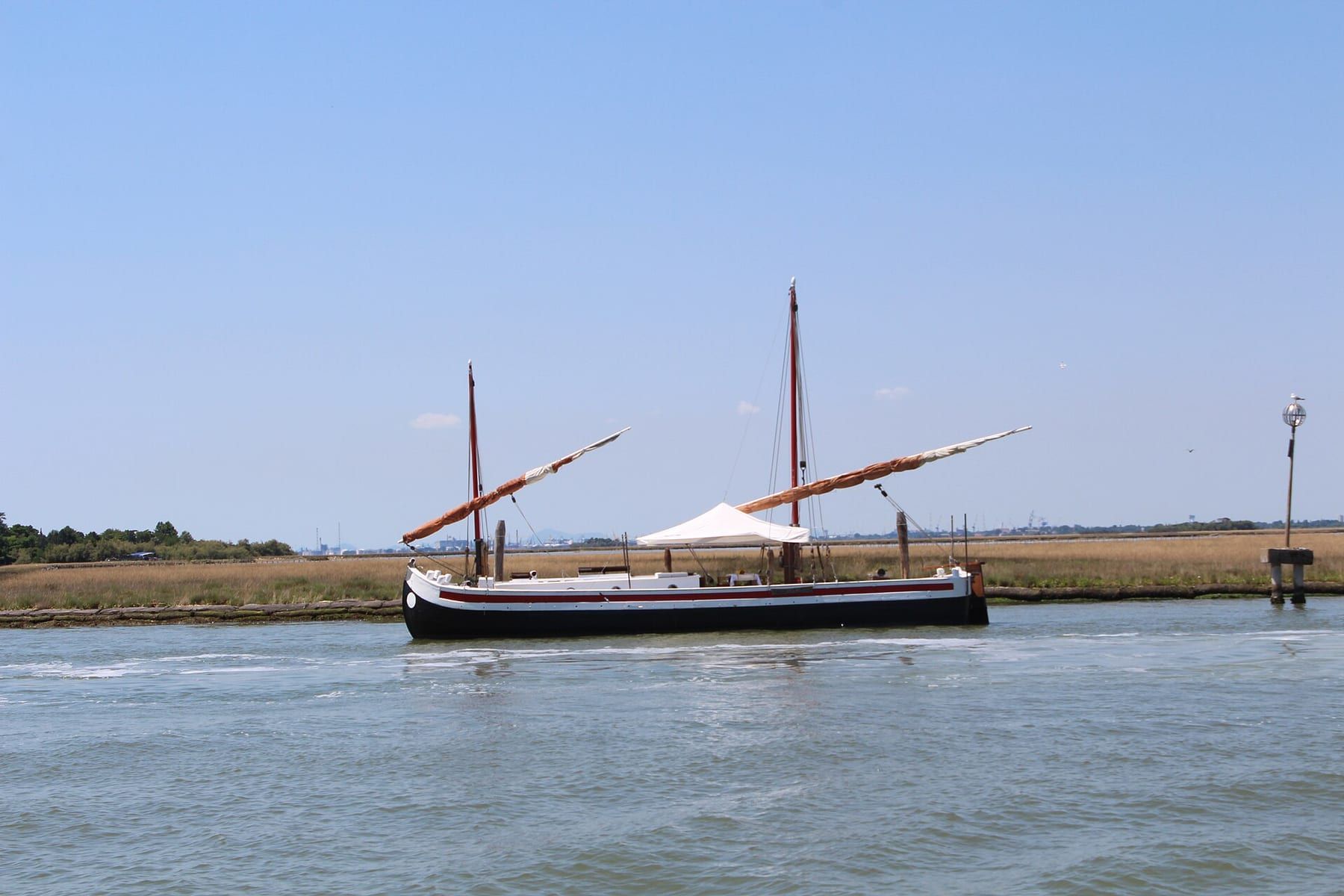
Timings, schedules and when a Venice water taxi is worth calling
The taxi’s time advantage grows the further you go from the centre: to Murano it is modest, while to Burano and Torcello it becomes substantial, because the scheduled service is slow and involves a change. Operators quote about 20 minutes of sailing from Venice to Murano and about 30 to Burano. The comparison has to be made over the whole journey, though: line 12 covers Fondamente Nove – Murano in 9 minutes, but from San Marco there is already another stretch of vaporetto to reach Fondamente Nove, and for Burano you have to add the wait for the boat to the 41 minutes of sailing.
There are three moments when calling a taxi is the right call:
- The evening trip back from Burano or Torcello, when scheduled sailings become sparse and missing the last one means being stranded.
- Flying in with accommodation on the islands, so you are not dragging suitcases between jetties and connections.
- Groups of four or more, because the cost per head lands close to an ACTV ticket.
If, on the other hand, there are two of you, with a rucksack and a whole afternoon ahead, the vaporetto is the right answer and there is not much more to say.
Fitting the islands into the rest of your trip
A few combinations that genuinely work:
- You are flying in and sleeping on Murano: set off from the airport, after reading up on Airport → Venice.
- You want to understand every figure in the fare schedule, not just the island ones: the full table is on Prices.
- You are travelling with a lot of luggage or a pushchair: read Luggage before you book.
- You are coming back after 22:00: the night surcharges are explained on Night taxi.
- You want to stretch the transfer out along the Grand Canal: the logic is on Grand Canal.
- You are heading for the coast as well: Lido, Punta Sabbioni and Cavallino are on Lido and Cavallino.
The short version
The water taxi to Murano and Burano has clear official prices — €60 and €115 per boat from the historic centre, €60 and €140 from the airport — and it becomes good value once you divide them between four or more people. Otherwise, the northern lagoon is one of the areas best served by Venice’s public transport, and there is no reason to spend more if you are travelling light.
If you have decided a private transfer is the right choice, booking it in advance locks in the price and saves you haggling on a jetty with your suitcases in hand.
Frequently asked questions
How much is a water taxi from Venice to Murano?
Under the fare schedule set by the Comune di Venezia (the city council), the historic centre ↔ Murano run costs €60 per boat (€48 for residents and people with disabilities). That is a price for the boat, not per person.
How much is a water taxi to Burano or Torcello?
The official historic centre ↔ Burano or Torcello run is €115 per boat (€92 reduced). From Marco Polo airport the same destination costs €140 per boat (€112 reduced).
Is a water taxi or the vaporetto better for the islands?
It depends on your group. An ACTV 75-minute ticket costs €9.50 per person, so for two or three people the vaporetto nearly always wins. For four or more, with heavy luggage or at awkward hours, €60 per boat to Murano becomes competitive.
Can you take a water taxi from the airport straight to Murano?
Yes. The official airport ↔ Murano fare is €60 per boat. You board at the airport's darsena, the boat dock, a 7–10 minute walk from arrivals along a covered walkway.
Can a water taxi do a tour of the three islands?
A tour with stops is not one of the scheduled runs: it is hire with a skipper, at an agreed price. The alternative is the meter (€15 on departure plus €2 a minute), but two hours of waiting and cruising comes to more than €250.
How much does a water taxi to the islands cost at night?
The city fare schedule sets a night surcharge of €10 between 22:00 and 06:00 (€8 reduced). The Consorzio Motoscafi applies a €15 surcharge to its own commercial rates between 22:00 and 07:00.
How many passengers and suitcases fit in a water taxi?
Operators generally quote a maximum of 10 people and up to 12 suitcases. From the fifth passenger onwards the city schedule adds €10 per person on fixed-price runs; beyond the first four suitcases you pay €3 per bag.
Is there a taxi rank on Murano or Burano?
No. Murano appears in the fare schedule as the starting point of several fixed runs, but none of the 14 city taxi ranks is on the northern lagoon islands. For the trip back, book ahead and budget for the €5 call-out surcharge.