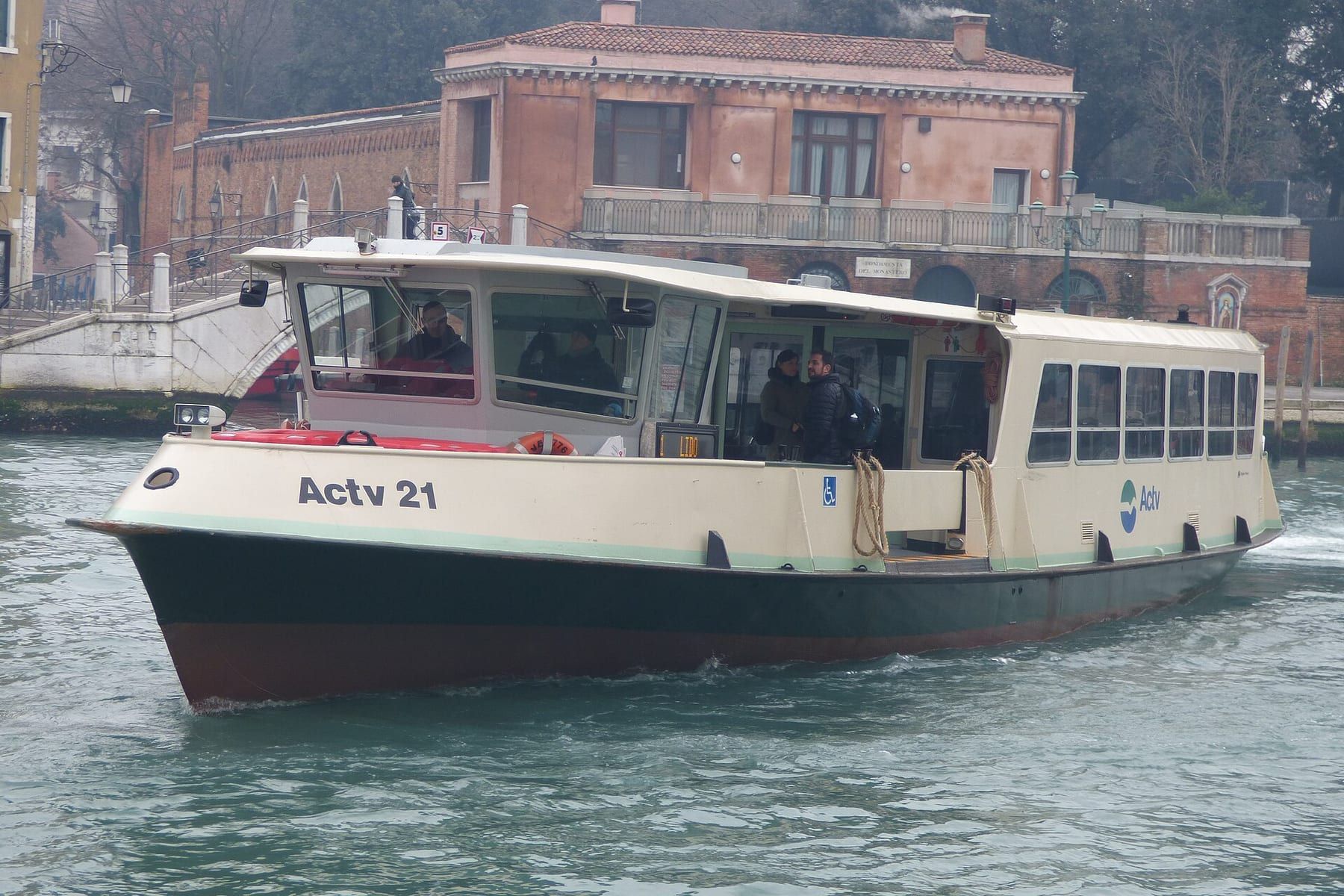
ACTV doesn’t sell transfers and doesn’t take anyone to their hotel door: it is Venice’s public transport, and that is how it has to be judged. Our verdict: a dense, dependable network over medium distances, irreplaceable for the islands, awkward with luggage and expensive for a single hop. If you are weighing the vaporetto against a water taxi, the deciding factor isn’t the price — it’s how many bags you are carrying and how far your hotel is from the nearest landing stage.
Who ACTV is and how the group is put together
ACTV S.p.A. is the company that physically runs the service, on the water and on the road. Above it sits AVM S.p.A., the holding company wholly owned by the Comune di Venezia, the city council, which pulled the group together after the corporate reorganisation of the last decade. Alongside ACTV it includes Vela S.p.A., the commercial and ticketing arm that runs the sales network and the Venezia Unica portal, and PMV S.p.A., which runs the People Mover. Group headquarters are at Isola Nova del Tronchetto 33.
Public transport in Venice goes back to the nineteenth century, with the first rowed and then steam-powered boats and the handover to the city council in the early twentieth century. ACTV in its present shape was created at the end of the Seventies by merging three existing companies, and became a joint-stock company after the national reform of local transport, with the rule that the public shareholding must stay in the majority.
The figures the company publishes give you the measure of the operation: around 160 boats, 150 floating landing stages, 620 buses across Mestre, Marghera and the Lido plus the two tram lines, more than 190 million passengers a year and 520,000 hours of sailing.
What it offers and what it costs
Almost every visitor will only ever use a handful of lines.
| Line | Route | Note |
|---|---|---|
| 1 | Piazzale Roma → Ferrovia → Rialto → San Marco → Lido | stops everywhere, about 45 minutes end to end |
| 2 | Tronchetto → Giudecca canal → San Marco → Grand Canal | limited-stop, faster |
| 4.1 / 4.2 | circular via Murano, one in each direction | for Murano from Fondamente Nove |
| 5.1 / 5.2 | circular via the Lido | the Lido S.M.E.–Certosa–Arsenale leg runs under concession to Alilaguna |
| 12 | Fondamente Nove → Murano → Mazzorbo → Burano → Torcello | the islands line |
| 14 | San Zaccaria → Lido → Punta Sabbioni | for Cavallino-Treporti |
On the mainland there are city and suburban buses, two tram lines and the People Mover shuttle linking Tronchetto, the Marittima cruise terminal and Piazzale Roma.
The prices recorded when we checked:
| Ticket | Price |
|---|---|
| Single 75 minutes Rete Unica (boats + buses + trams + People Mover) | €9.50 |
| Single 75 minutes, road only (mainland, People Mover) | €1.50 |
| Aerobus to/from Marco Polo | €10.00 (€18.00 return) |
| Ticket bought on board a bus | €3.00 |
| Venezia Daily Pass, 24 hours | €25.00 |
| 48 hours | €35.00 |
| 72 hours | €45.00 |
| 7 days | €65.00 |
| 72 hours Rolling Venice (ages 6–29) | €27.00 |
| Mainland Mestre day pass | €5.00 |
| Airport supplement on a multi-year pass | €7.00 each way, €13.00 return |
| Bicycle or non-folding scooter | €1.50 |
Two details that save money: the €25 day pass also covers regional Trenitalia trains inside the city boundary, and the €5 mainland pass does the same around Mestre. Children under six travel free.
Watch the exclusions: lines 16 and 19 and the Casino line are not covered by ordinary tickets or by tourist passes, and neither are Alilaguna services, which have fares of their own.
The Venezia Unica card and resident fares
The line between tourist prices and resident prices runs through the Venezia Unica / Carta Venezia card. Enabling it as an ACTV travel pass costs €10.00; adding the reduced fare for boat services costs more or less depending on where you live: nothing extra for residents of the Comune di Venezia (€10 in total), +€10 for the wider metropolitan area (€20), +€30 for the Veneto region (€40) and +€90 for everyone else (€100). The card is personal and valid for five years. For anyone who lives or works here the gap is enormous: a single Rete Unica ride falls to €1.50.
For a stay of a few days, though, it makes no sense: the activation cost never comes back.
Strengths
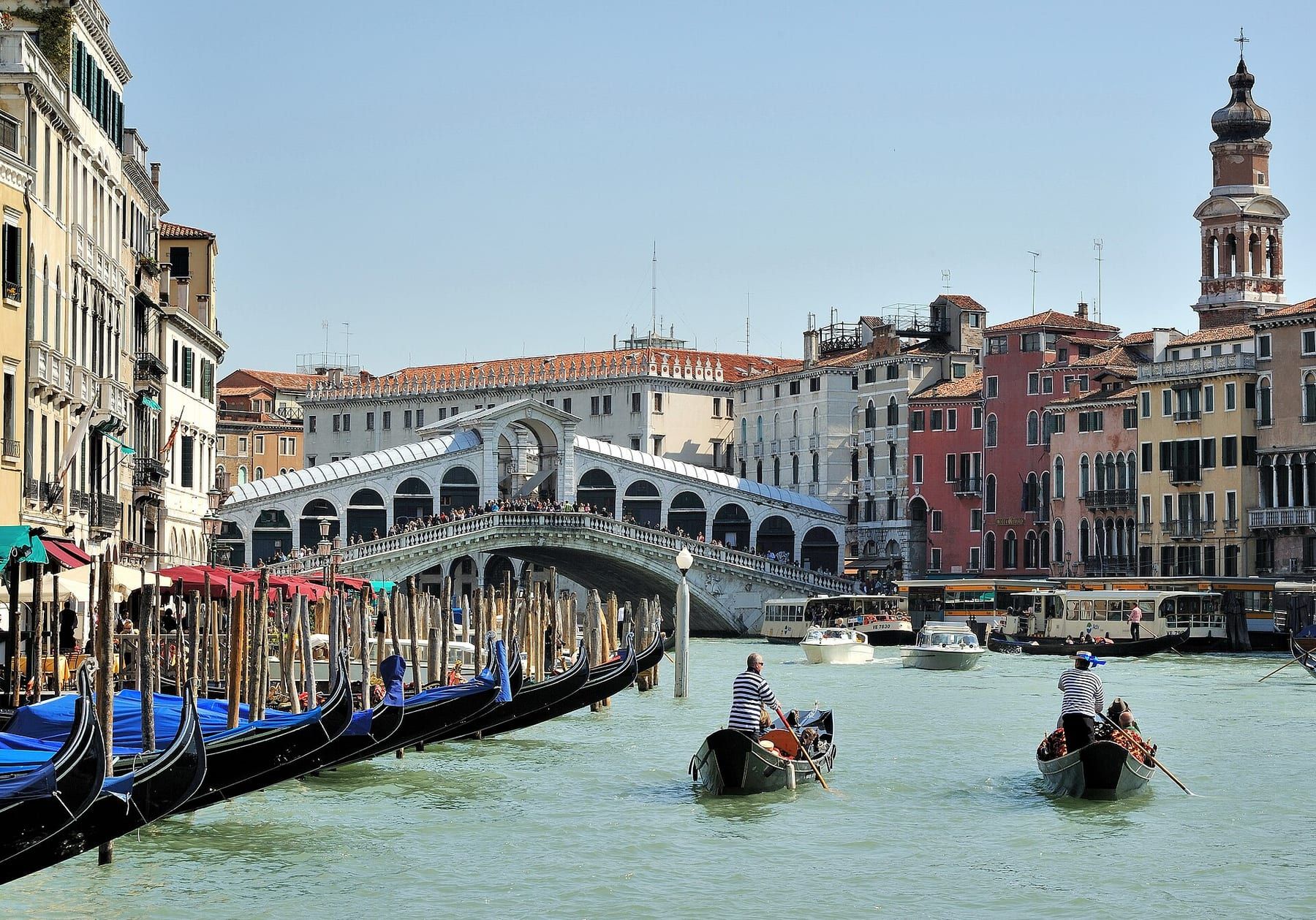
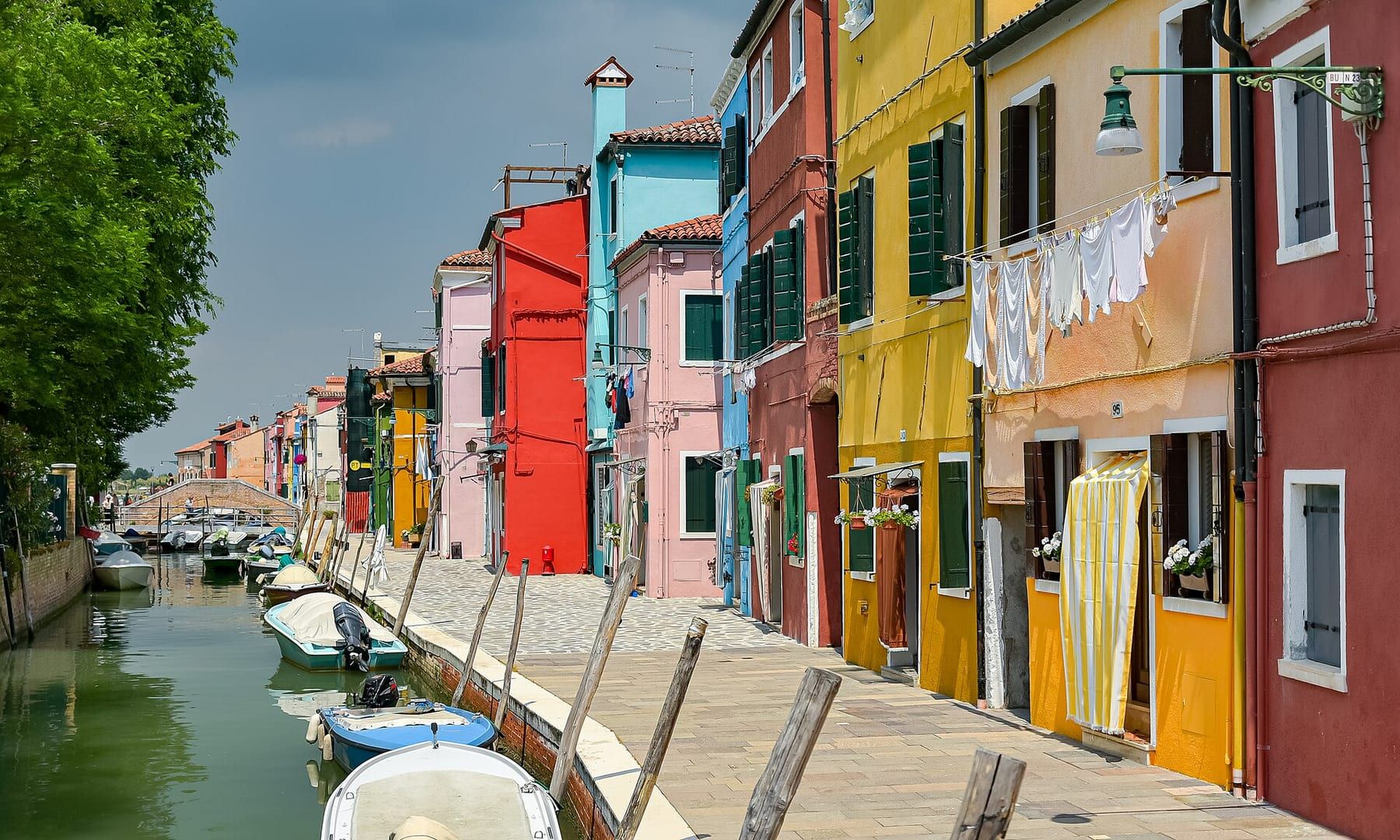
- Genuine coverage. No other operator reaches Murano, Burano, Torcello, the Lido and Punta Sabbioni on a single ticket.
- Frequency and predictability on the main lines, with a dedicated night service.
- Integrated passes that take in buses, the People Mover and regional trains inside the city boundary.
- Very low resident fares, handled through a named personal card.
Weaknesses
- €9.50 for a single ride is expensive for a short hop, and almost everyone perceives it that way.
- Overcrowding, far and away the most common complaint: it concentrates on line 1 between Ferrovia and San Marco, broadly between 10:00 and 12:00 and between 16:00 and 19:00.
- Chaotic boarding and long waits at the landing stages in those same windows.
- Awkward with luggage: your suitcases stay with you on board, standing, wedged among the other passengers.
What travellers say
The reputational picture has been consistent for years: people love the vaporetto for what they see from it and dislike it for what it feels like to ride. On Tripadvisor the recurring themes are crowding, disorderly boarding and waiting times, offset by praise for the views along the Grand Canal. Local guides and forums point to exactly the same problem window on line 1 in the middle of the day.
On price the judgement is widespread rather than angry: €9.50 for a single is called expensive even by people who then recommend the pass anyway. It is worth remembering that the rise in the tourist ticket from €7.50 to €9.50 came alongside the introduction of a very low resident fare on the Aerobus, and that the standard Aerobus fare went up from €8.00 to €10.00 in the same round.
Two practical warnings. The first concerns penalty fares for travelling without a valid or validated ticket, and here the figure of €60 that circulates in reviews does not match the official schedule. The group publishes a three-tier penalty table, always made up of the fine plus the ordinary network fare plus administrative costs: pay within five days and you get the minimum, €50.00 plus the ordinary fare plus €5.00 — on the city water network that works out at €64.50; from the sixth to the sixtieth day it rises to €100.00 plus the fare plus €15.00; from the sixty-first day to €300.00 plus the fare plus €15.00. On the bus and tram network the fare added is €1.50, on airport routes €10.00. There is a reduced €1.50 charge for a forgotten season pass, which you can settle at a ticket office by producing the pass. Plenty of complaints remain about validators that fail to register the tap: always validate, and keep the receipt.
The second concerns strikes. During recent industrial action the water services saw take-up of around 60%, with more than half of vaporetto departures cancelled and only the legal minimum service guaranteed. If you have a flight or a train to catch, don’t rely on the vaporetto alone on a strike day.
When to take it and when not to
Take the vaporetto to move around the city once you have dropped your bags at the hotel, to reach the islands, for the Lido and for any journey where luggage isn’t an issue. With two or more boat rides a day, the 24- or 48-hour pass pays for itself straight away.
Don’t take it on arrival if you have suitcases and a hotel a long way from the landing stage: between bridges, steps and connections, the money you save comes back as effort. In that case compare a water taxi from the airport or the shared option, and read the full comparison of water taxi, Alilaguna and vaporetto. For the road link to the airport there is still the express coach run by ATVO and the ACTV Aerobus; for the islands, the official water taxi numbers are on the Murano and Burano page. The other reviews are listed on our operators page.
-
from €18 per person
Book on Tiqets -
from €12 per person
Book on Tiqets
The ACTV vaporetto remains the cheapest and the most Venetian way to cross the city: pick it when you have time and free hands, and keep the water taxi for the day you arrive and the day you leave.
Frequently asked questions
How much does a vaporetto ticket cost in Venice?
A single 75-minute Rete Unica ticket costs €9.50 and covers boats, buses, trams and the People Mover. Bought on board a bus it costs €3.00; children under 6 travel free.
Is the ACTV day pass worth it?
The 24-hour pass costs €25: it pays for itself from the third boat ride onwards. There is also 48 hours at €35, 72 hours at €45 and 7 days at €65. With a Rolling Venice card, for ages 6 to 29, the three-day pass drops to €27.
Is an ACTV ticket valid on Alilaguna too?
No. Alilaguna services, including the airport routes, have their own tickets. Lines 16 and 19 and the Casino line are also excluded from ordinary ACTV tickets.
How do you get from the airport with ACTV?
On the Aerobus, line 5, which costs €10.00 one way and €18.00 return and terminates at Piazzale Roma. From there you continue by vaporetto, on foot or by water taxi.
Which vaporetto lines are the most useful?
Line 1 runs the full length of the Grand Canal stopping everywhere, roughly 45 minutes from Piazzale Roma to the Lido. Line 2 is limited-stop and quicker. Line 12 links Fondamente Nove with Murano, Mazzorbo, Burano and Torcello. Line 14 serves the Lido and Punta Sabbioni.
Is the vaporetto practical with suitcases?
Not really. Your bags stay with you on board, at peak times line 1 between Ferrovia and San Marco is jammed, and at every stop you are back to hauling cases over bridges. With more than one suitcase each, consider a water taxi.